Riviera
From Nice to Monaco
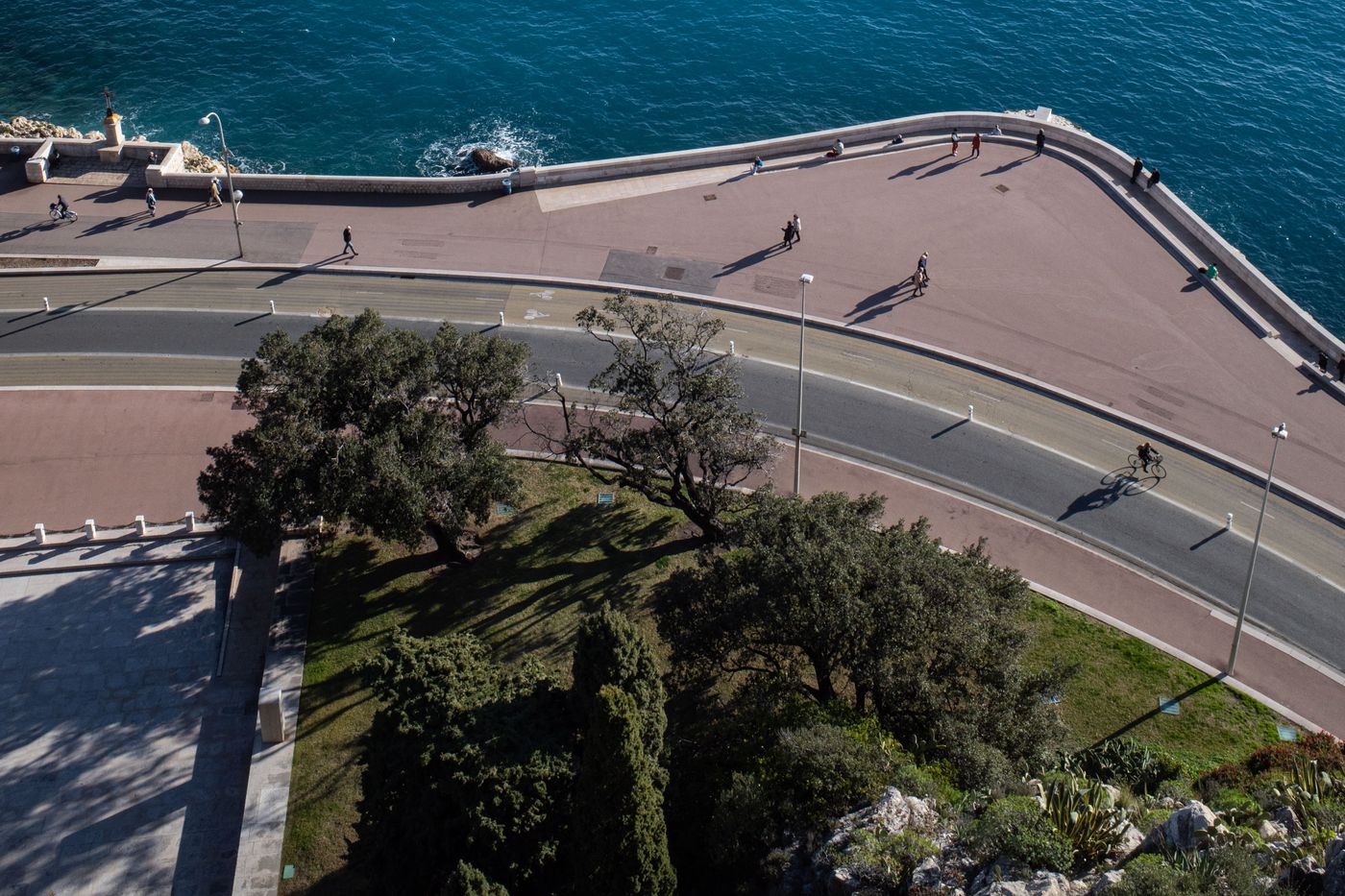
From the old streets of Nice to the harbour lights of Monaco, the coast shifts in tone every few kilometres. The pleasure lies in the transitions — the roads, pauses and private viewpoints that turn a journey into part of the destination.
Three roads, three different days
Thirty minutes separate the two cities on a clear morning, and the route you choose changes the journey entirely.
The Basse Corniche hugs the water through Villefranche-sur-Mer and Beaulieu. It is the slowest and the most beautiful, and in summer it is also the most congested. The Moyenne Corniche climbs and gives you the view most people picture when they imagine this coast, passing below Èze. The Grande Corniche runs highest of all, along the old Roman road, and is for people who are not in a hurry and want to see the whole bay at once.
The motorway exists and takes twenty minutes. It is the right choice exactly once: when you are late.
What sits in between
The stretch between the two cities is not empty space to be crossed. Saint-Jean-Cap-Ferrat, on its peninsula, is quiet in a way that the towns on either side are not. Èze is perched and theatrical. Cap d'Ail is the least known of the three and the most residential.
Each is a different answer to the question of what living on this coast should feel like, and the distances between them are small enough that the choice is genuinely about character rather than convenience.
Timing the drive
Leave Nice before eight and the Basse Corniche is yours. Leave at six in the evening in July and you will spend forty minutes looking at the car in front of you.
In Monaco itself, the practical detail nobody mentions is parking. The public car parks are excellent, well signposted and far easier than hoping for something on the street. Choosing the right one for where you are actually going saves more time than any route decision.
Villefranche, Beaulieu, Saint-Jean
These three sit within a few kilometres of each other and could not be more different. Villefranche-sur-Mer has one of the deepest natural harbours in the Mediterranean and an old town that has barely changed. Beaulieu-sur-Mer is flatter, quieter and more residential, with a belle-époque formality the others lack. Saint-Jean-Cap-Ferrat occupies its own peninsula and is the most private of the three by some distance.
Anyone deciding where to live on this stretch should spend a full day in each. On paper they are neighbours; in practice they attract completely different people.
Arriving from elsewhere
Nice airport sits at the western end of the bay, which makes it unusually convenient: fifteen minutes into Nice, thirty to Monaco outside peak hours. The helicopter transfer to Monaco takes seven minutes and is the only part of the journey that is genuinely faster than driving.
The train is the underrated option. It runs along the water, stops at Villefranche, Beaulieu, Èze and Cap d'Ail, costs a few euros and is immune to the traffic that defines summer afternoons. For a day in Monaco without a car, it is simply the right answer.
The point of the journey
Nice and Monaco are often described as close, which is true in kilometres and misleading in every other sense. One is a city with a long working life of its own; the other is a principality of two square kilometres where almost everything is deliberate.
Moving between them regularly is what teaches you which one suits which occasion — and the roads in between, taken slowly, are where that understanding actually forms.